
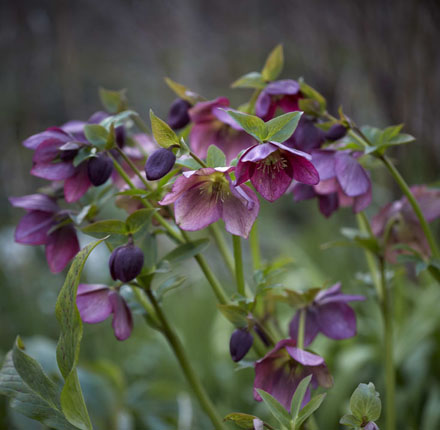
January may feel quiet in the garden, but if you look closely, something beautiful is already stirring. Hellebores—often called Lenten roses—begin to wake just as winter settles in, pushing up fresh foliage and nodding blooms when little else dares to bloom. This moment, right as new growth emerges, is the perfect time to give these winter stars a little care.
By mid to late January, last year’s hellebore leaves have done their job. They’re often flattened by snow or rain, marked with black spots, or simply looking tired and weather-worn. Trimming away this old foliage clears the stage for what’s coming next. Not only does it make room for fresh growth, but it also reveals the flowers, which can otherwise be hidden beneath last season’s leaves.
Using clean, sharp pruners, cut the old leaves right down at the base of the plant. Take care not to nick the emerging flower stalks and tender new foliage—they’re surprisingly sturdy, but worth a gentle hand. Removing old leaves also helps reduce the spread of fungal issues like hellebore leaf spot, giving the plant a healthier start to the year.
Once the old foliage is cleared, the transformation is immediate. Suddenly, the garden feels awake. Glossy new leaves unfurl, and blooms—ivory, blush, plum, or nearly black—stand proudly above the soil. It’s a small task with a big visual payoff, especially in the depths of winter.
January hellebore care is a quiet ritual, one that reminds us the garden is never truly asleep. With a few thoughtful cuts, you help usher in the new season early—making space for beauty, resilience, and the subtle promise of spring just ahead.