
Winter is a perfect time to prune many trees, shrubs, perennials, and ornamental grasses. With leaves gone, it’s easier to see the structure—or “bones”—of your garden, and you won’t worry as much about accidentally damaging smaller neighboring plants. Plus, it’s a great excuse to get outside and get a little exercise!
Timing & Conditions
Avoid pruning during extreme cold, but here in the Puget Sound, our winters often bring mild days and even our famous “sun breaks.” As long as temperatures aren’t far below freezing, your plants will be just fine.
Remember: don’t stress! Most plants can be pruned in almost any season with a little common sense. Winter and summer are ideal for major work, though. A quick tip: pruning before the main growing season (April–June) stimulates growth, while pruning afterward tends to slow growth.
What to Prune in Winter
Trees & Shrubs
Winter is perfect for major thinning or redirecting growth. Remove dead, diseased, or broken branches, and clear out clutter—like tidying the inside of your house!
-
Basic shaping: Head back wild leaders and shoots on arching shrubs like abelia, blueberries, and summer-blooming spiraea.
-
Spring bloomers: Lightly prune plants such as mock orange or forsythia, being careful not to remove all their flower buds.
-
Hydrangeas: Remove dead wood but keep most of last year’s new growth, which will bloom this season.
-
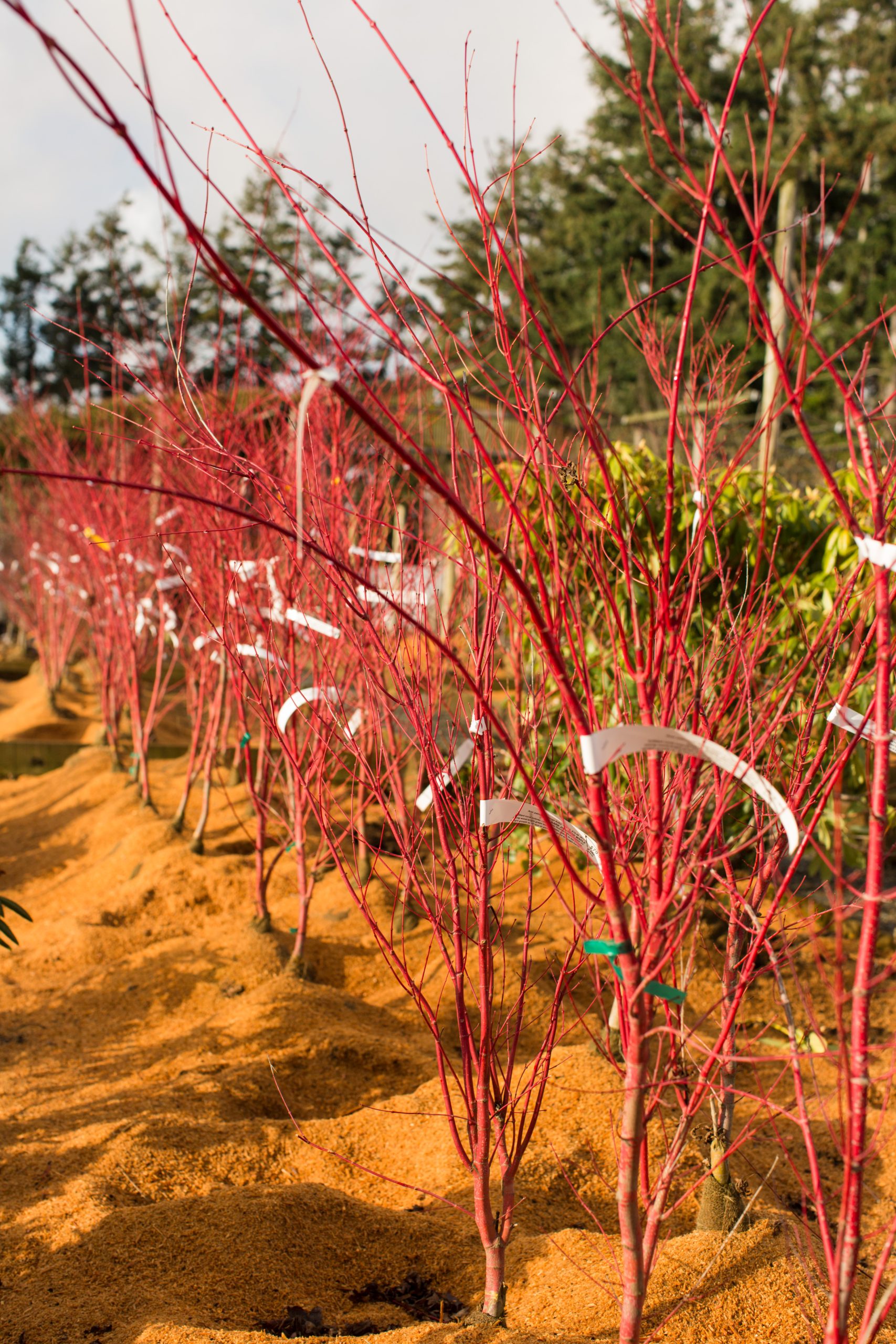
Aggressive pruning: Red twig dogwood, smoke bush, or shrub willow can be cut down even to the ground to encourage vibrant new growth. For hedges like laurel, a late-winter prune minimizes the time you’ll see their “ugly” phase.
Note: Most trees don’t respond well to hard pruning. Regular thinning is generally best to enhance natural form.
Fruit Trees & Berries
Winter is ideal for fruit trees and cane berries. Prune to maximize fruit production by opening the canopy for light and air circulation and removing suckers.
-
Raspberries & cane fruits: Remove older canes that fruited last year, keeping only the one-year-old canes.
Vines
Apply the same principles as trees and shrubs: thin out clutter and snip back wild leaders. Hold off on pruning spring-blooming vines until after they flower.
Perennials & Ornamental Grasses
Cut back overgrown or collapsed perennials and grasses. Some can be trimmed a few inches above the ground; others down to ground level. Avoid cutting emerging green shoots. Evergreen grasses usually just need light thinning.
Pruning is surprisingly physical! Warm up, stretch, and pace yourself, especially if you’ve been less active this winter.
If you have questions about specific plants, our friendly staff at Christianson’s Nursery are always happy to help. Winter is a slower season, but with a little pruning, you can give your garden a head start on its best year yet!